Saturday, August 26, 2006

The Best Cup of Tea 最好的那杯茶


The Best Cup of Tea

Wine is surly the national drink of France, who drink more wine than water. And for the English and Irish people, that honour must belong to the English style red tea. I had spent many years in Dublin as an overseas student, and had picked up their habit of having tea every day. Both the English and Irish people make their tea more or less the same way – with boiling hot water, and served with fresh milk and sugar. I must say that it is really great to have a nice cup of hot tea right after finishing battling with the cold wind or chilly rain which appear in the 300 out of the 365 days in a year. Not particularly crazy about it, I just took it as the right kind of drink in the right kind of environment.

I seldom have English tea after I moved back to Hong Kong. It is rather warm here in Hong Kong. Most people prefer cooling drinks like the green tea and ice lemon tea, and I am no exception. We do have Hong Kong style milk tea, but my Irish and English friends refused to accept that as a proper cup of tea, since it is made rather strong with blend of different types of tea leaves, condensed milk is used instead of the creamy fresh one, and is pre-mixed with the tea before it is delivered to your table. I am not surprised by their complains of not being able to find a proper cup of English tea even in the famous restaurants in town. In case if anyone is really craving for the traditional English tea, they do serve the proper kind in many large hotels, but I would prefer making my own at home – they do sell fresh milk and tea bags in the supermarkets.

However, the best cup of English tea I have had so far came from a small local café in the seaside suburb of the northern Japanese town of Wakkanai in Hokkaido. It was raining, windy, cold, with a temperature of 6ºC, and I was freezing. I took refuge in this café to escape the bad weather. As soon as I had spotted “Earl Grey Tea” from the menu, I decided to order one, curious about how a local Japanese café would serve the English tea. A pot of hot tea was delivered to the table with lemon and fresh milk, and I was really satisfied with that, taking the first cup with lemon, and the second one with milk. That was the best cups of English tea I had ever had.

There is an old Chinese saying, one may not appreciate the beauty of a flower when there are plenty of pretty ones blooming around, but would treasure dearly a gift of firewood from a friend delivered in a cold snowy winter day. Surely that cup of tea from the Japanese café would not be the best in the world, but to me it was the best since it came at the right time when I needed one badly.


最好的那杯茶

葡萄酒號稱為法國人的「國飲」,皆因他們飲酒比飲水還要多;對於英國和愛爾蘭人來說,能獲此榮銜的,非英式紅茶莫屬。我曾在都柏林留學多年,也沾上了他們飲茶的日常習慣。英國和愛爾蘭人泡紅茶的方式大同小異,都是用大熱開水沖泡,上茶時自行加入牛奶及糖,也就是我們說的英式奶茶。我得承認,當每日在戶外與寒風冷雨搏鬥完之後,一杯滾燙的奶茶在手,是何等美妙的賞心樂事;而在當地一年中有三分二的日子,寒風冷雨是正常不過的現象。自己並非對奶茶特別瘋狂,只是在這樣的環境飲適當的飲料而已。

回到香港後,很少飲英式奶茶,香港天氣炎熱,大部份人都愛綠茶或冰凍檸檬茶一類清熱解暑的飲品,我也不例外。港式奶茶頗為流行,但我的英國和愛爾蘭朋友,都不認為這是正統的紅茶,皆因由多種不同茶葉沖泡而成的港式奶茶,茶味十分濃郁,棄鮮奶而採用濃縮淡奶,而且上茶前奶與茶早已混和,而非由飲用者按自己喜好調配。經常聽到他們的投訴,抱怨甚至在很多城中的高級餐廳,都沒有正統的英式紅茶供應,這個我完全理解。其實如果真的是「茶癮」難耐,在很多大型酒店的餐廳,倒是有供應的,但我倒寧願自己在家中泡製。鮮奶和茶包,一般的超級市場都可以買得到啊。

說起來大家或許不相信,到現時為止我最享受的那杯紅茶,竟然是來自日本北海道稚內市郊海邊的一間小茶室。那是一個氣溫只有攝氏六度的下午,寒風夾帶著冷雨,壞天氣把我冷得發抖的身軀驅趕進這家冷清的小店。當我看到餐牌上寫著「伯爵紅茶」,就毫不猶疑地叫了一客,有點好奇一間日本的本地茶室到底如何泡製英式紅茶。一壺滾燙的紅茶送到跟前,另附上一小碟鮮檸檬片和一小勺鮮牛奶,果然是正統,甚感滿意之餘,先來一杯鮮檸檬伯爵紅茶,再來一杯英式奶茶。這就是我最享受的那杯紅茶。

中國人有這樣的講法:錦上添花,很多人都不覺稀罕,雪中送炭,才令人倍感珍貴。日本小茶室的那杯紅茶,當然不會是世界上最好的,但對我來說,卻是最回味的,只因它的出現,正是我最需要的時候。

Friday, April 07, 2006

Ching Ming, the Grave-sweeping Festival 清明時節


Ching Ming, the Grave-sweeping Festival

“A drizzling rain falls like tears on the Mourning Day;
The mourner's heart is going to break on his way.
Where can a wineshop be found to drown his sad hours?
A cowherd points to a cot 'mid Apricot Flowers.”

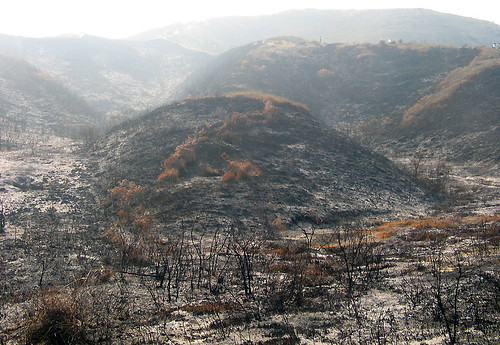
This well known poem by Du Mu of the Tang Dynasty has described well the normal weather condition at Ching Ming – it rains. In fact as far as I have remembered, 80% of the past Ching Ming Festival were raining days. The Ching Ming Festival this year was a bit unusual. It did not rain, just being warm and cloudy with occassional sunny spells, but not a single drop of rain. The even more unusual (and luckily) thing was, there was only 13 reports of hill fire.
For the Chinese, it is a day to remember and honour one's ancestors, and to tend to the graves of the departed ones. It is also the time when spring returns to the good earth and the land is greened again by the newly sprouted, a perfect time for the family to have a stroll among the greenery of the countryside after tending to the graves of the ancestors. The act of strolling in the field in spring time in such occasion was called “Spring Visit” or “Stepping into the Green” in the ancient time. This had been a long-time custom in many parts of the country for Ching Ming Festiival, and hence the other name for the occasion, “The Stepping into the Green Festival”. Some people (e.g. the people of Shantou region) are still following the custom nowadays.


As the weather normally starts to get warmer and wetter around the time of the Ching Ming Festival, it is also the right time for planting trees and corps, there is an old Chinese saying “It is the right time to plant the melon and bean seedlings around Ching Ming, so are the saplings”. Planting trees at Ching Ming was another old Chinese custom.

Sweeping the graves, offering food and libation to the ancestors and departed family members during Ching Ming is still a popular custom followed by many Chinese people nowadays. However, the customs of “Stepping into the Green” and tree planting have long been forgotten by many. Instead, there is a new replacement - “Burn to the ground”.

There are two important dates for remembering and honouring the ancestors in Chinese custom, one in the spring time, namely the Ching Ming, and the other in the autumn, namely the Chung Yang. Six months after the last tending to the graves, they must have been covered by the overgrown again. Due to laziness, some people just set the grave ground on fire to clear all the overgrown. Being careless during the common ritual of burning the offerings made of papers to the ancestors is also another cause of hill fire. But the most ridiculous of all is the intentional burning of the whole surrounding area to the ground by some selfish, immoral and foolish people, just base on the groundless speculation that burning the whole place will bring them good fortune and wealth. This is a crime that not only destroy the vast area of vegetation and all the living things within the area, but also threaten the lives and properties of the nearby villagers and hikers. In 1999, there were a total of 443 reports on hill fire in a single day during Ching Ming, and 300 hectares of hillside bushland was burned to ground. In 2001, 35 hikers and grave-sweepers were trapped by the hill fire and nearly died at Yuen Long.

Introducing such a disaster to nature and other people just for the sake of wishing for their own good fortune and wealth, I do not believe that their ancestors would answer such immoral and evil prayers from their descendants.


清明時節

  清明時節雨紛紛
  路上行人欲斷魂
  借問酒家何處有
  牧童遙指杏花村

唐朝詩人杜牧的七言絕詩《清明》家喻戶曉,清明會下雨,好像是正常不過的事,而事實上在我記憶中,清明時節十有八九都是下雨天。今年清明雖然有薄霧,但卻一丁點雨也沒下過,而且氣溫偏高高,還有陽光,反而有點不習慣。不過比較「意外」而且慶幸的是,今個清明本港只發生了十三宗山火。

清明是華人傳統拜祭先人和掃墓的日子,時值大地回春,草木吐綠,一家大小出遊到鄉郊掃墓,正好順道郊遊。春遊在古時又稱「探春」、「踏青」,古人向有清明踏青活動的的習俗,故清明又有「踏青節」之稱,中國部份地方(例如潮汕人)仍保留有清明日郊遊踏青的活動。

清明前後氣溫升高,春雨紛飛。雨量增多,種植樹苗成活率高成長快。因此,中國自古以來亦有清明植樹的習慣,農諺中亦有「清明前後,點瓜種豆。植樹造林,莫過清明」的講法。

近代人清明節祭拜祖先、悼念已逝的親人的習俗仍很盛行,但對於踏青春遊和植樹的習俗,卻完全忘記了。不再踏青、植樹之餘,似乎還多了個把綠野林木「徹底燒清光」的習慣!

華人祭祖傳統中,清明重陽是一年中最重視的春秋二祭,半年前清理過的祖墳,大概又重新湮沒在雜草叢之中,有人為貪圖方便快捷,採取了火燒的方法清理雜草。掃墓者隨意在山間墓地焚燒冥鏹,任由仍未熄滅的火種飄散,亦引發連場山火。不知是甚麼時候開始,有人基於所謂「火燒旺地」的說法想當然,故意縱火焚燒山地,以「保佑自家轉運發財」。這些自私、愚蠢兼缺德的行為,不單令大片草木一日之間在烈火中化為焦土,亦嚴重地威脅到附近民居和遠足人仕的生命財產。根據記錄,1999年清明節當日,香港總共就發生了443宗山火,300公頃林木化為焦土;2001年重陽元朗橫洲一場山火,更令35名遠足及掃墓人士被困於山火之中,險些葬身火海。

為了自家轉運發財而荼炭生靈,如果祖先有靈,恐怕也不會保祐如此缺德造孽的子孫。

Monday, April 03, 2006

The fading old Wan Chai 退色的舊灣仔


The fading old Wan Chai

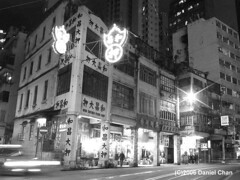
Between Queen's Road and the tramway of Johnston Road are the old residential blocks built before the starting of the WW2, and streets that preserve many local cultures and characteristics carried down from the past. All that has changed since the starting of the re-development project.

Must re-development always be tearing everything down to the ground before start building anything?

The four 80-year-old detached buildings at Johnston Road, including the Wo Cheung Pawnshop, were "Lucky enough" to be choosen as the ones to be preserved. The surroundings ones were not so lucky, now all disappeared.


退色的舊灣仔

在皇后大道東至莊士敦道電車路之間是二次大戰前發展的住宅區,有多條很具香港本地特色的街道,部份更仍保留有戰前住宅的特色。重建社區,是否有必要全部拆卸重建,把整個舊區「連根拔起」?

莊士敦道項目中的和昌大押及相連的四座樓宇,是「有幸被選中」保留的唐樓之一。兩邊及後面其他的,經已消失。

Saturday, April 01, 2006

Playing Dr. Doolittle 扮演杜立德醫生


Playing Dr. Doolittle

A beautiful butterfly landed on my palm on a sunny morning, allowed me to take as many close-up photos as I like without flying away, Cool! It surely would make anyone a happy man, believing that he/she has gained the trust from a butterfly. I have seen butterflies stopping on the surface of sweating human bodies, probably attracted by the warmth and humidity, or the contents of human sweat. But it could be even worse - dying or too weak to fly away.

People like me always willing to believe that animals do have human feelings and can be friendly to humans. I have always been dreaming of myself being Dr Doolittle, able to communicate with animals, understanding them, and able to give them the help they need and gain their trust. But the brutal fact is, wild animals are instinctively either too timid or alerted in response to human’s approach, just like having an instinctive dread of fire. Humans are bounded to be their natural enemy.

A wild animal that would not go away on your approach normally means two things : it is either too sick or weak to escape, or there is something it needs or needs to protect from you so desperately that it is worth risking its own life. Of course, it could be the reason that it has never seen a human before and is unaware of the fatal danger. Some people love to feed wild animals, thinking that this will do them good. In fact, apart from making them depend totally on human feeding, the animals will also loose their alert on humans which are always the major potential danger to their life, and thus destroying their instinctive survival ability in the wild.

And then again, it could be even worse – the wild animal would not go away, simply because it wants you as food!

Sad, cruel, but true.


扮演杜立德醫生

一個陽光燦爛的早上,一隻美麗的花蝴蝶降落在我的手掌上,留連不去,任由我不斷為牠拍攝微距距照片,正點啊!任何人遇到這種情況,大概都會開心不已,願意相信自己居然有獲取蝴蝶信任的能耐。我曾多次見過蝴蝶停留在別人濕透汗水的衣衫上,很可能是因為喜歡衣物表面瀰漫著的暖濕氣息,又或者是汗水中某些物質吸引了牠,亦可能是牠正處體弱無力,甚至瀕死邊緣,無法起飛。

不少的人都會像我這般,一廂情願地相信動物擁有人類感情,願意親近人類。自已一直都依然會夢想自己可以像故事中杜立德醫生般有與動物溝通的能力,明白牠們,了解牠們的需要,幫助牠們,從而得到牠們的信任。但殘酷的現實是,對於野生動物來說,人類根本就是牠們的天敵,對人類的怯懼和戒心,是與生俱來的生存本能,就像牠們天生都怕火一樣。

野生動物不會避開你,通常有兩個理由:一是牠們可能受了傷或正病重,無法逃離現場;二是你身上或現場有牠們極急需或重視的,而且程度足以令牠們以性命相博。當然,亦有可能是牠們從未見過人類,不識人心險惡。有些朋友熱愛餵飼野生動物,堅信是為了動物的福祉,但實際的情況是,這樣不單令野生動物逐漸變得完全依賴人類餵飼,牠們亦會無選擇性地放下對所有人類的戒心,因而大大削弱了牠們的天然生存能力。

但對你來說,野生動物不會避開你,可能是另一個更壞的原因-你是牠們的獵物!

可悲,殘酷,但卻是現實。

Friday, March 31, 2006

Bits and pieces – in the Book of Memory 片刻.片語.片心

Working 9 to 8 in office, rushing home for dinner, checking out the utility bills and re-payments, browsing through the forum of which I am a moderator, taking care of the club business as a committee member, ……oh yes, and a less-than-5-hour daily sleeping time. Busy, busy and busy. It seems that all these are the inescapable routines in my daily life. The weekly hiking events on Sundays should be the only time I could relax myself; but then again, I am the hiking leader of the group in most of the outings. Even scanning through and trying to sort out the loads of photos taken during the week has become increasingly a tiring task to me, and taking photograph is supposed to be one of my favourite pass-time.

I remember dearly my life as a college student in Dublin. Busy with my study and part-time work, but still managed to squeeze enough time to truly relaxing myself : wandering alone around the city on my bicycle aimlessly in sunny afternoons or to the Wicklow mountains for the weekends, laying down and do nothing but listening to my favourite classical music for a hour before going to bed, chatting with friends just about everything… those were the days, happy memories, remote but with details I could refresh by browsing through the old photo albums on which detailed notes were attached.

I do enjoy most of things I am doing, but they leave me no time to slow down, think and discover my true feelings about life, not to mention recording them in someway. I really don’t want to have part of my life missing from my book of memory, and regret that when I grow old. "A picture tells a thousand things", and a brief note would add more insight into your heart. I may not have time for a diary article each day, but can at least manage to pick a photo for each day and write a brief note about it. Bits and pieces they might be, these will be the records of the true feeling about that moment of my life, bitter or sweet, paragraphs that fill up my Book of Memory.


朝九晚九的辦公室生涯、趕車回家晚飯、處理形形式式的賬單繳款、瀏覽自己有份管理的網上討論組、身為團體執行委員需要處理的會務…呀,對了,還要加上不足五小時的睡眠…一大堆不可避免的程序,似乎就是我每天忙碌生活的寫照。每個周日的遠足活動,應該可以放鬆一下吧,但偏偏又是帶領活動的領隊。甚至乎是我最喜愛的攝影,面對著一大堆需要花時間挑選、處理和分類的照片,眉頭不禁又皺起來。

記得在都柏林唸大學的日子,忙碌的學習與兼職之餘,仍能擠出足夠時間放鬆自己:在陽光燦爛的周六下午踏著自行車漫無目的地在市內遊蕩,周末踩上威克洛山區的自行車漫遊,睡覺前躺著專心地聽一個小時的古典音樂,與朋友天南地北地閒扯…。歲月流金,似是久遠的回憶,但又歷久常新,全憑一本本舊相簿頁上密密麻麻的解說字句。

雖然忙碌,但我仍盡量做到享受生命每一天,只是生活似乎不容我慢下來,細味其中的真諦和感受,更莫說如何記錄下來。我不想在我老去的日子中,懊悔地翻揭著自己記憶冊上一頁頁的空白。「千言萬語相中載」,再繫上一兩句的心底話,也許就是最能洞察心靈的媒體。我或許不能每日長篇大論地寫日記,但至少應該可以按心情挑選一張照片,寫下一兩句心中惑覺。雖然記錄的只是生命中的片刻,心靈上的片語,一片片的影像心語,就是構成我記憶冊上的章節段落。